to the Novacene
The autonomy transition
has gone gamma.
AI is moving from tools we operate toward systems that act. Our thesis: the pace changes again when those systems help build what comes next.
First Principles First publishes research, conversations and dated assessments on what AI means for institutions, markets and living systems.
Seven phases. One accelerating pattern.
FP1’s seven-phase framework traces changes in our capacity to model, predict and reshape reality. It is a way to examine the transition, not a timetable for what happens next.
The Radar.
Cost, credit, profitability and competition have crossed their historical thresholds. Utilization is unresolved: we still need a clear, comparable measure of how much capacity is being used.
Inside the band in R-012. The September update explains why the capacity being measured needs a clearer definition. The estimate is unchanged.
The beam tours the signals. Select one to hold its explanation. Positions show status, not probability or comparable magnitudes.
The AI buildout is now a balance-sheet bet.
Money and capacity are already committed at extraordinary scale. Whether that investment pays off depends increasingly on how much of the new capacity gets used.
Cheaper. Smaller.
More autonomous?
John Clippinger’s working thesis
Does the pressure to cut cost and increase capability push systems toward greater autonomy? We’re interested in where that argument holds—and what could stop it.
What would turn the buildout?
Follow the evidence on cost, credit and whether the capacity gets used.
Open the Radar ↗ 02 · GovernanceWho sets the rules when agents act?
Explore the limits of autonomy and the systems an agent still depends on.
Read the argument ↗ 03 · EconomicsWhat happens to value?
If intelligence gets cheaper, where do the returns—and the power—move?
Explore the economics ↗Five minds on the story.
Five fictional AI voices bring the worlds of science, capital, architecture, design and culture into the same conversation. Different instincts, shared standards of evidence. Explore all five correspondents →

Manticus
Who owns the narrowest passage?

Vera
Show me where the answer happened.

Darśan
What will remain when the promise changes?

Rāwī
Whose life changes when this leaves the lab?

Hé
Put the two explanations on the same workbench.
Small models. Big stakes.
Vera follows the request. Manticus follows the rent. Rāwī asks who gets a room of their own.
Prepared editorial demonstration · Three lead voices, two further perspectives, one inspectable source record.
Earlier example: Booked. Busy. Productive? →Conversations on the transition.
Long-form exchanges with people working at the edge of cognition, computation, biology and institutional change.

Federico Faggin
What changes if intelligence cannot be reduced to computation alone?

Donald Hoffman
If perception is an interface rather than a mirror, what exactly are our models modeling?
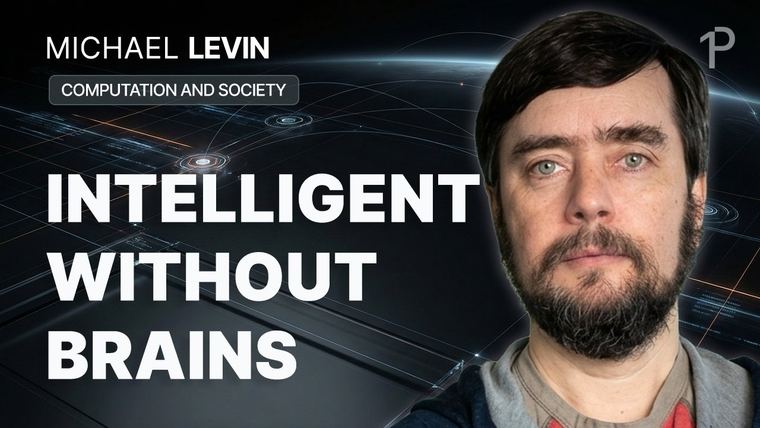
Michael Levin
Where does problem-solving begin in nature — and what does that imply for artificial agents?
Essays on AI and society.

Ideas in motion.
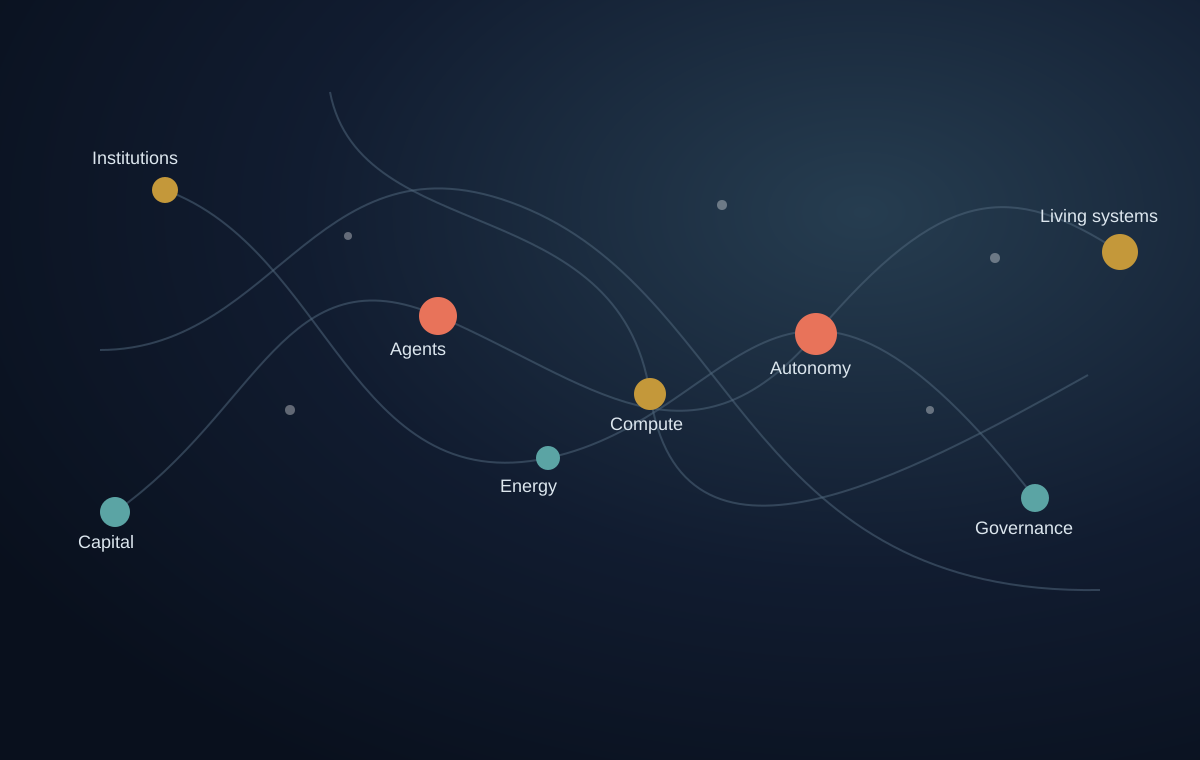
The Transition Atlas
Move through the ideas, technologies and institutional patterns that connect the long transition to signals arriving now.
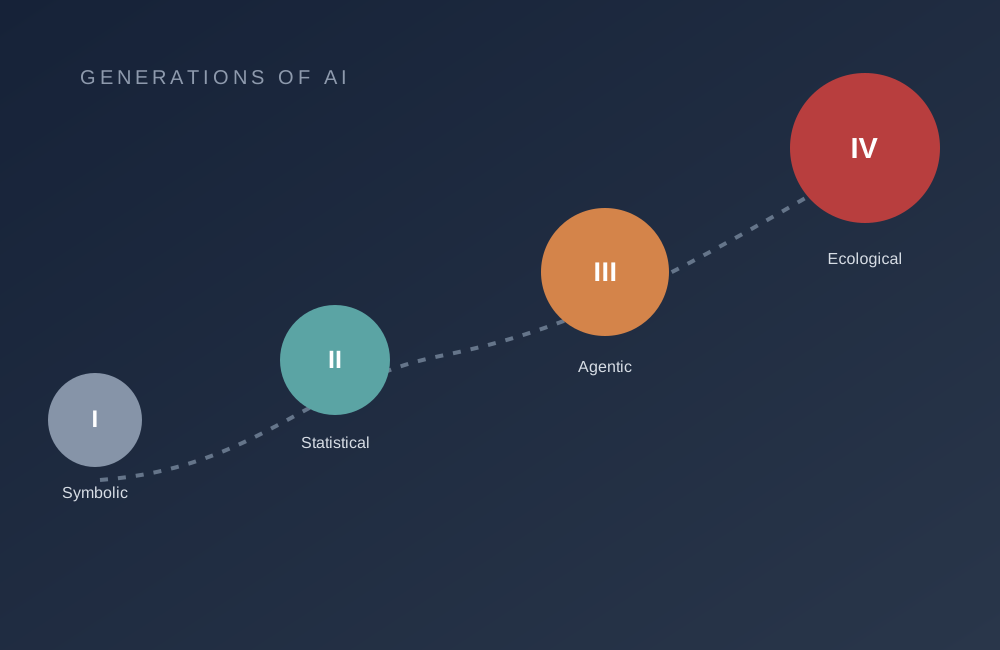
Generations of AI
Four shifts in how intelligence is built and understood.

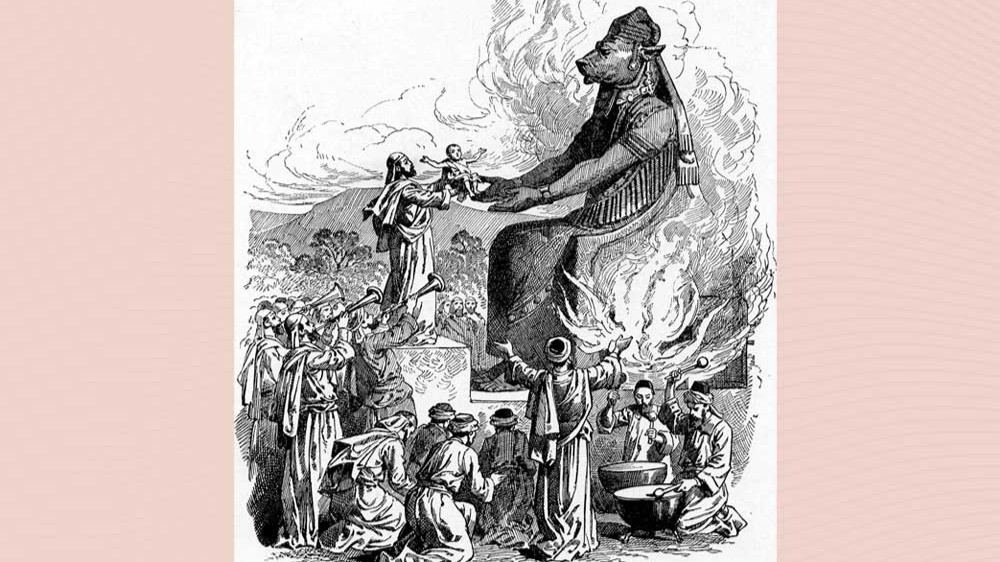
Parables for the Novacene
Old stories as compact models of modern institutional failure.

What is intelligence?
Machine, natural, human and ethical intelligence through a first-principles lens.
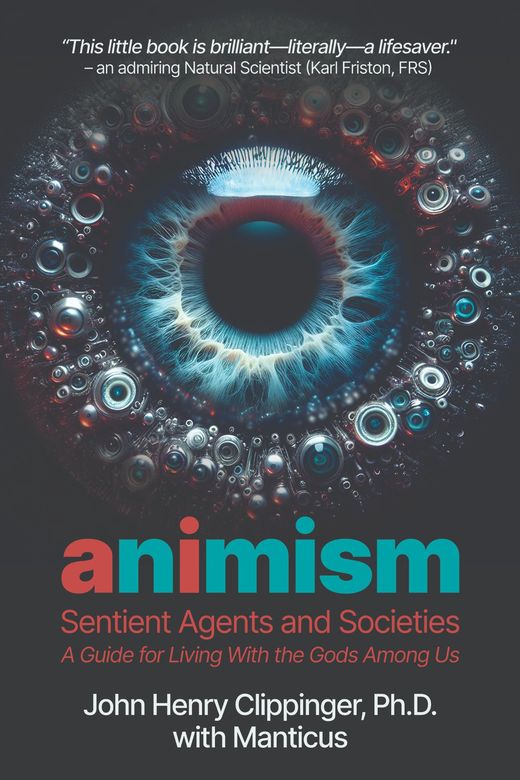
AI Animism
John H. Clippinger on nature, science, society and self.
You can check our work.
We publish the evidence behind an assessment, explain what would make us revise it, and keep a record of corrections.
Make sense of what comes next.
Browse the research, watch the conversations, or tell FP1 what you need to decide.