Browse the work.
Explore how AI changes work, institutions and living systems through essays, conversations, maps and research tools.
Start with the format you want.
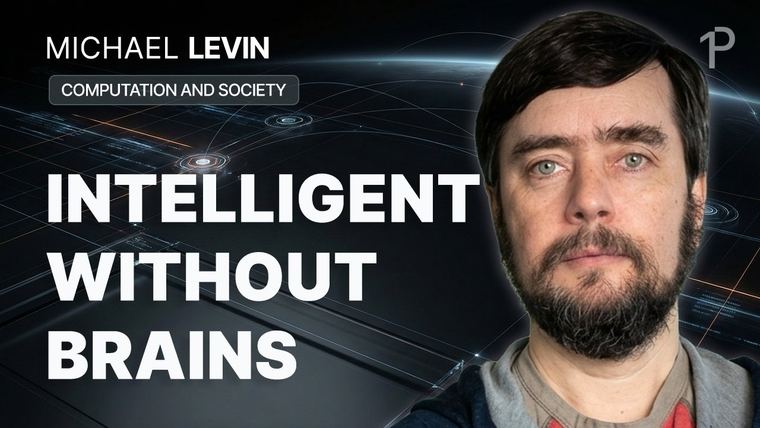 ▶
▶Conversations about intelligence.
Long-form exchanges on consciousness, agency, active inference, living systems and governance.
Essays on AI and society.
Labor, autonomy, belief, governance and the economics of intelligent systems.

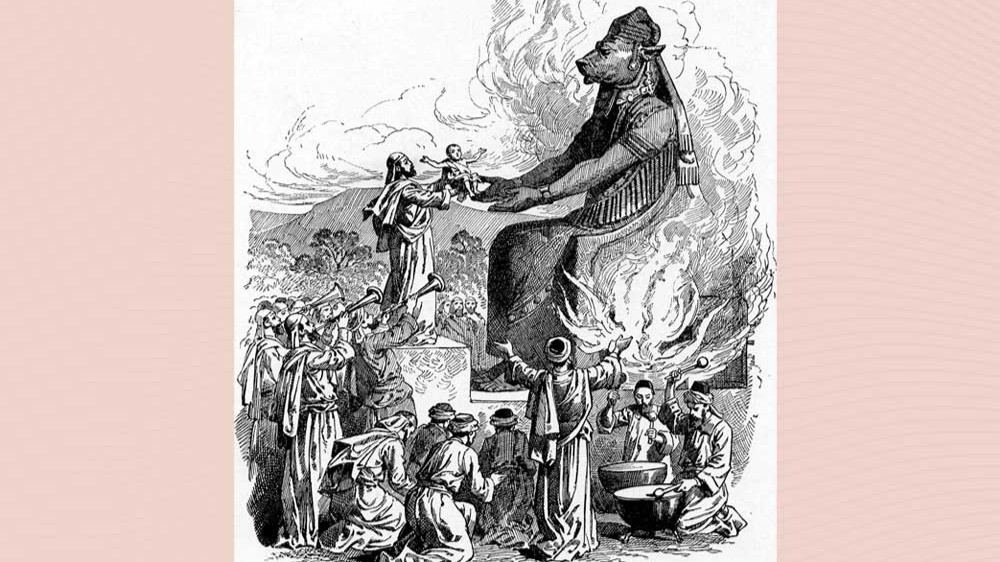
Parables for the Novacene.
Old stories as compact models of modern institutional failure.
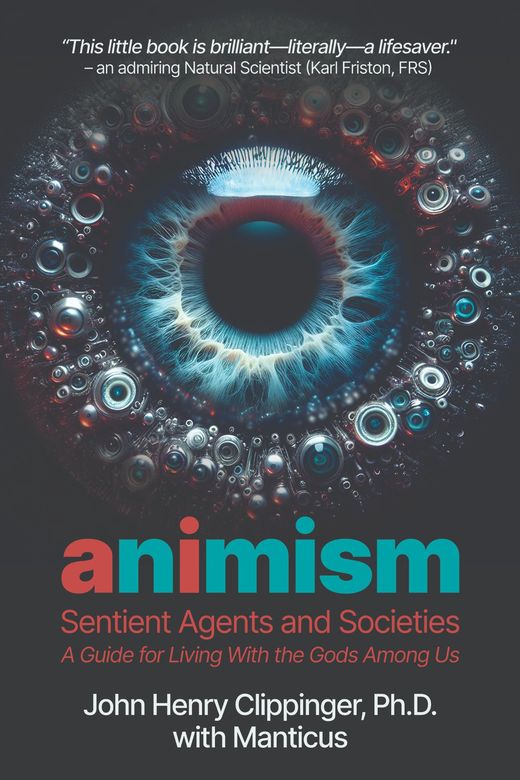
AI Animism.
John H. Clippinger on nature, science, society and self.
Essays.

Shelter as Sovereignty
A proposal linking housing, living systems and currency.
Humanoid Labor in Technocracy
Work, freedom and industrial democracy.
The Commoditization Trap
When efficiency devours its own market.

When Beliefs Become Pathological
What happens when models become identity.
Symbiotic Intelligence
Agentic nature, the sacred and the secular.
The Illusion of Autonomy
An argument for intelligence built on interdependence.
Beyond Left and Right
Governance by first principles and natural intelligences.

What Is Intelligence?
Machine, natural, human, ethical.
Instruments.
Tools for checking claims and tracking change.
Explore the ideas.
The Transition Atlas
A visual map of the ideas, technologies and institutional patterns that shape the transition.
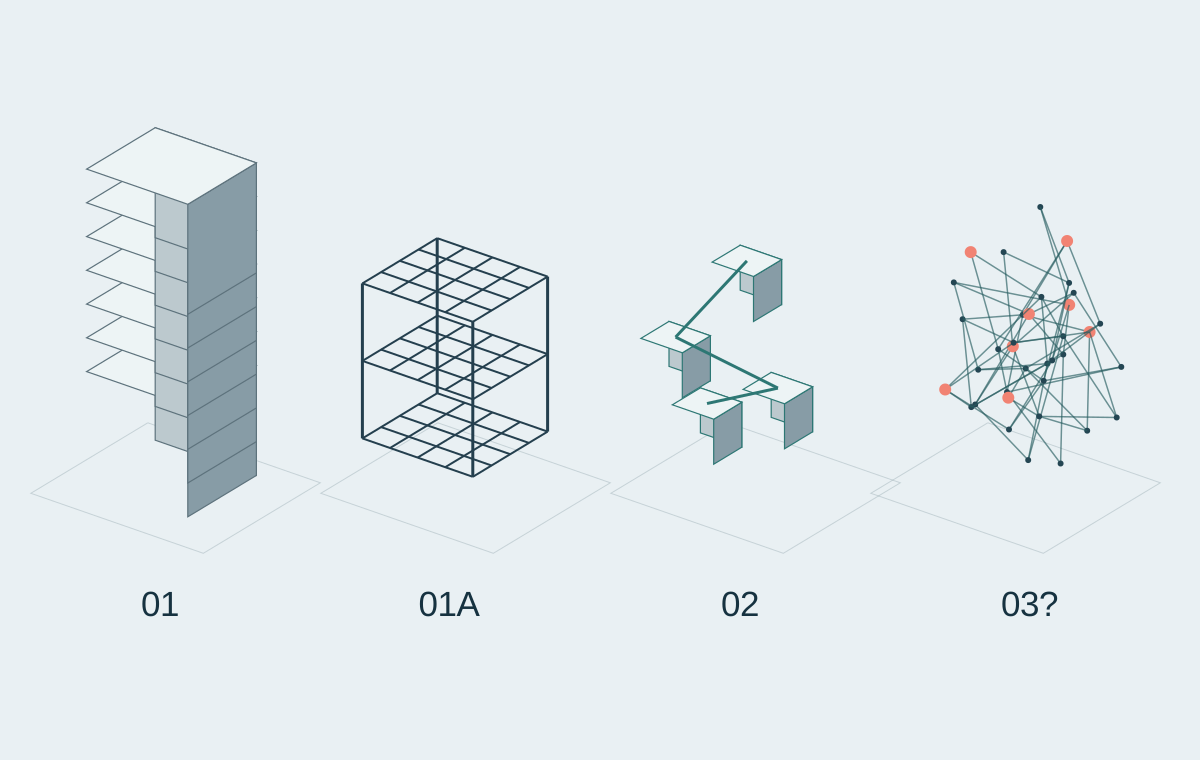
Generations of AI
Four generational shifts in how intelligence is built.
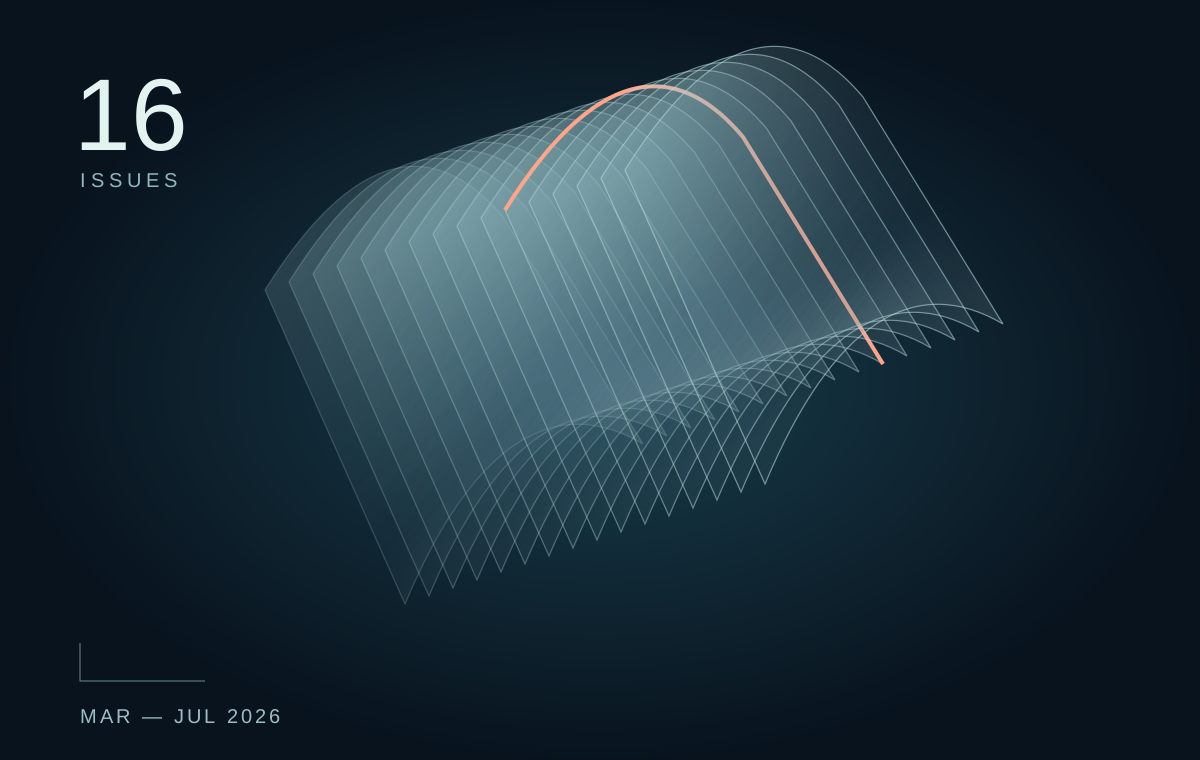
State of the Transition
Sixteen issues following the AI buildout from March to July 2026.
Manifesto
The ideas and commitments behind FP1’s research.
Methods and proposals.
Published methods, dated applications and policy proposals serve different purposes. Start with the overview, then inspect the full argument.
From evidence to a decision
Eight steps, the rules behind them, and links to the full methodology papers.
Explore the method → Archived briefing · April 2026Bubble or platform shift?
Three correspondents examine the infrastructure buildout in an early published briefing.
Read the briefing → Archived review · May–July 2026What changed over two months?
FP1’s reading of infrastructure, AI agents, work, security and chip policy. Public sources and limits are stated.
Inspect the follow-up → Policy proposal · March 2026AI as a Public Good
A seven-pillar proposal for Congress on access, governance and accountability.
Read the proposal →